Back planter shortlist - summary
Planter 6.2 m long x 39 cm wide x 60 cm deep · 2.0 m wall · aim 2.5 m+ (3 m is a stretch) · sun mostly midday to afternoon (2.5-4 h at the soil in winter) · about 7 plants at 85-90 cm spacing
| # | Plant | Score | 2.5 m in 3 yrs | 2 m in 2 yrs | Width (m) | Sun/shade | Sewer roots | Drop | Trim |
|---|
Back planter options - 31 Oct 2026
A side-by-side comparison for the narrow back planter. Compare screening, upkeep and root risk, then explore the concept renders through planting and the first two years.
Plant comparison
Green look is display only, not weighted. Rank is recomputed across all plants using unrounded weighted totals. Existing displayed totals retain their supplied rounding. Shade and green look are not weighted.
Site and planting notes
Screen target: aim for 2.5 m+ above the soil, clearing the 2.0 m rear wall; 3 m is a stretch in this narrow planter. Each plant is flagged for reaching 2.5 m in 3 years and 2 m in 2 years: start height is the listed 300 mm stock height where a supplier gives one, otherwise 1.2-1.8 m assumed; add the page's cm/yr range for each year. Yes = the low end clears the mark, No = the high end misses it, Borderline = the range straddles it. Estimates, not forecasts.
Planter: Confirmed narrow steel trough, 39 cm inside front-to-back (width) and 60 cm soil depth. The biggest realistic stock is about 300-330 mm pots or 45 L bags, subject to actual root-ball dimensions. A 400 mm root ball will not fit.
A 300 mm root ball is about 30 cm wide, leaving about 4-5 cm each side to backfill in the 39 cm trough. A 330 mm root ball leaves about 3 cm each side. A 45 L bag is an option only if its actual root-ball width and depth fit; bag volume alone does not establish fit.
Allow for any liners and braces within the confirmed 39 cm internal width, and obtain actual root-ball width and depth from the supplier. Do not assume that a listing labelled 300 mm is genuinely 300 mm wide.
Physical fit does not establish long-term suitability. Soil depth is confirmed at 60 cm. Trough length is 6.2 m (about 7 plants at 85-90 cm spacing). Drainage, irrigation and whether roots can enter underlying ground remain unknown. Soil surface elevation is separate from soil depth. No source located validates these plants reaching 3 m in this particular trough.
Annual figures are nursery claims or explicitly labelled estimates for established plants under favourable Sydney growing conditions. They are not measured Sydney trough growth rates. Root restriction, establishment, pruning and the lower end of the stated sunlight range can delay growth substantially.
Years-to-3 m figures assume a 300 mm start. Numerical times are growth-only estimates using (300 cm minus starting plant height) divided by annual height gain. They exclude an unquantified establishment delay and slowing near mature height. Where a measured 300 mm stock height was unavailable, a clearly hypothetical 100 cm starting plant is used only to illustrate timing.
The two-year classifications are judgements for the proposed planting. Borderline means possible with sufficiently tall stock and favourable conditions, not dependable in this trough. None merits an unconditional yes.
Published stock heights below are supplier examples, not verified market-wide typical heights or guarantees of current stock. Null means no numerical height tied to that exact pot size was verified. Mature heights, photographs, standards and other cultivars were not substituted for ordinary stock heights.
Pot dimension evidence: Frenchams lists a standard 200 mm pot with 192 mm internal diameter and a standard 250 mm pot with 246 mm internal diameter. Root balls can therefore be slightly smaller than nominal pot sizes. · Winter Hill lists its 25 L pot as 300 mm diameter and 250 mm high. · Evergreen Trees Direct lists its nominal 30 cm pot as 33 cm wide. This nominal stock size fits within the confirmed 39 cm width, leaving about 3 cm each side if the root ball is 33 cm wide.
Light: Photos show full midday sun. Treat this as part-to-full sun, approximately 4-7 hours in summer and 2.5-5 hours in winter (estimates). Ratings describe shade tolerance, not the assumed site exposure. Shade score is a display-only sorting scale: 4 = Good in part shade, 3 = OK, some thinning, 2 = Poor in part shade, 1 = Needs full sun. These are ordinal labels, not measured plant scores, and do not change weighted totals. None of the current plants is rated Needs full sun; a conditional flag is shown when that rating applies.
Root barrier: 0.75-1 mm HDPE across the base and up the sewer side and ends, overlapped 300 mm and taped, with a sealed sleeve on the riser standing proud of the soil; keep drainage away from the riser.
This is the proposed containment detail, not a Sydney Water approval or guarantee of sewer safety. Sydney Water's avoidance guidance still applies. Not listed does not mean safe.
Hardiness evidence: Sydney frequency labels are qualitative, not measured incidence. Cultivar resistance does not cover every pest. Treatment burden is indicative; use only products labelled for the plant and pest. Unfetched and Reddit quotes are marked (unverified link).
Viburnum options
Common sweet viburnum grows quickly but becomes broad. Emerald Lustre has larger glossy leaves and vigorous growth, so it needs more space and clipping. Tinus is slower and more compact, with its own pest profile. Dense Fence is a viburnum selected for denser growth and less pruning than the common form, but is still about 2 m wide. Thin Fence is narrower at roughly 0.9-1.6 m, not a proven 35-45 cm hedge. Thrips can affect all; shade may reduce density. Growing guidance · Dense Fence · Shade and narrow spaces
Viburnum pests (Thin, Dense and Quick Fence)
All three are the same species, so they share pests; cultivar differences are UNVERIFIED (Ozbreed calls Thin Fence "generally pest and disease resistant"). The "sap-suckers" Ozbreed mentions are mainly thrips - Yates calls them "the biggest pest of Viburnum", showing as silver-brown speckling under leaves - plus occasional scale (sticky leaves, black sooty mould), aphids on spring shoots ("cause little harm", Aussie Green Thumb) and two-spotted mite (Garden Green). Mealybug: no viburnum-specific Sydney source found (UNVERIFIED).
How serious: mostly cosmetic and treatable. Treatment is white oil or pest oil, sprayed under leaves and repeated (Yates), or leaving it for ladybirds and other predators (Ozbreed). A dense hedge against a wall is harder to spray. No Sydney-specific incidence data found (UNVERIFIED).
Compared with pittosporum beetle: the landscaper said the beetle "destroys the leaves" and a Sydney nursery said they are "always treating" Green Pillar. Nothing found suggests viburnum sap-suckers are that severe; they are a monitor-and-oil problem, not a reason to exclude.
Murraya cultivars
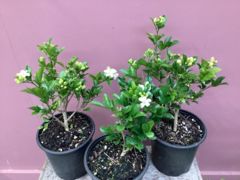
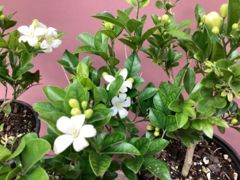
Lush & Thin MUR01 is the narrowest documented option, about 2-3 m tall and 0.8-1 m wide, but is still M. paniculata and carries the same sewer-list concern. Min-a-min is too small for screening and may be M. ovatifoliolata rather than M. paniculata; confirm identity. Sweet Privacy is about 1.8-2.5 m tall and 1.5 m wide. Exotica is M. paniculata. Lakeview availability is not confirmed in Sydney. No cultivar has demonstrated safer roots. Lush & Thin · Sweet Privacy · Identity guidance
Camellias (all excluded)
All camellias, including the landscaper's part-shade picks Slimline Avalanche and Pure Silk, are excluded as too messy (petal drop) - see Excluded plants. Background: Neither is proven low-drop: sasanqua petals shed repeatedly during flowering. Single-flowered Setsugekka and Plantation Pink are alternatives with fewer petals per bloom, but lower total litter is unproven and both need width control. They are information-only alternatives, not scored entries.
Plant details & concept renders
Cards follow the table order. Select a thumbnail to enlarge; use ← / → to browse and Esc or click to close.
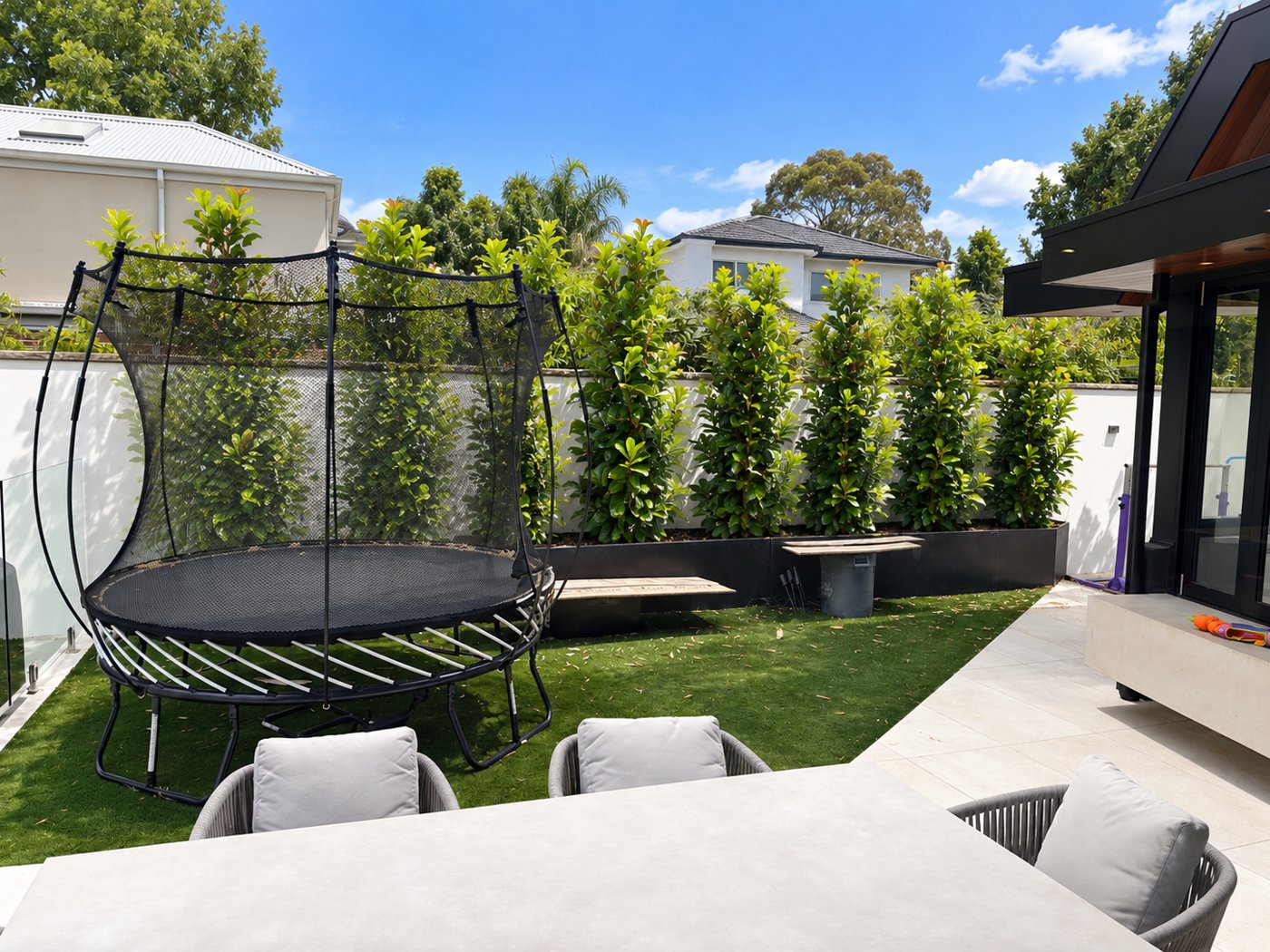
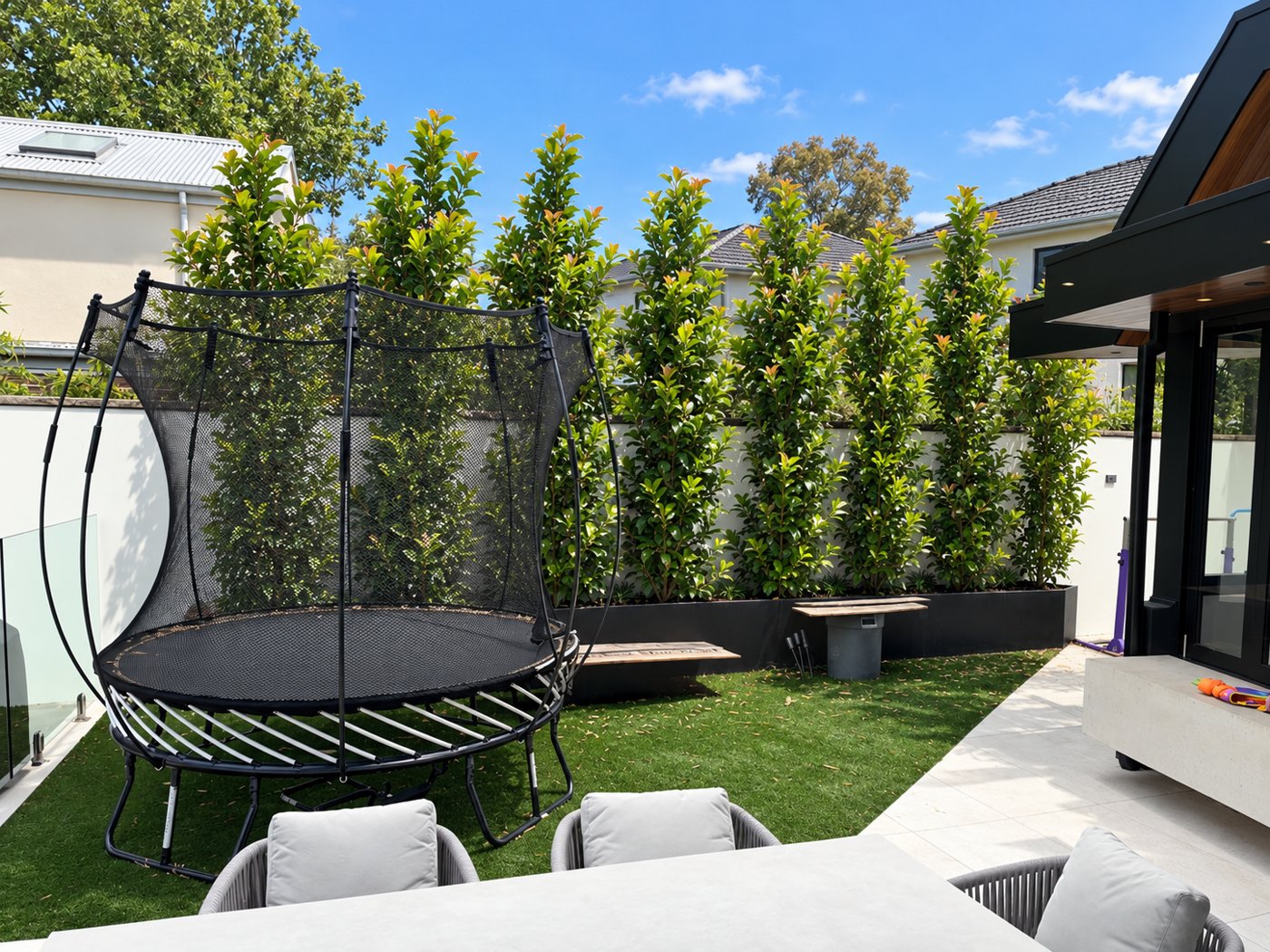
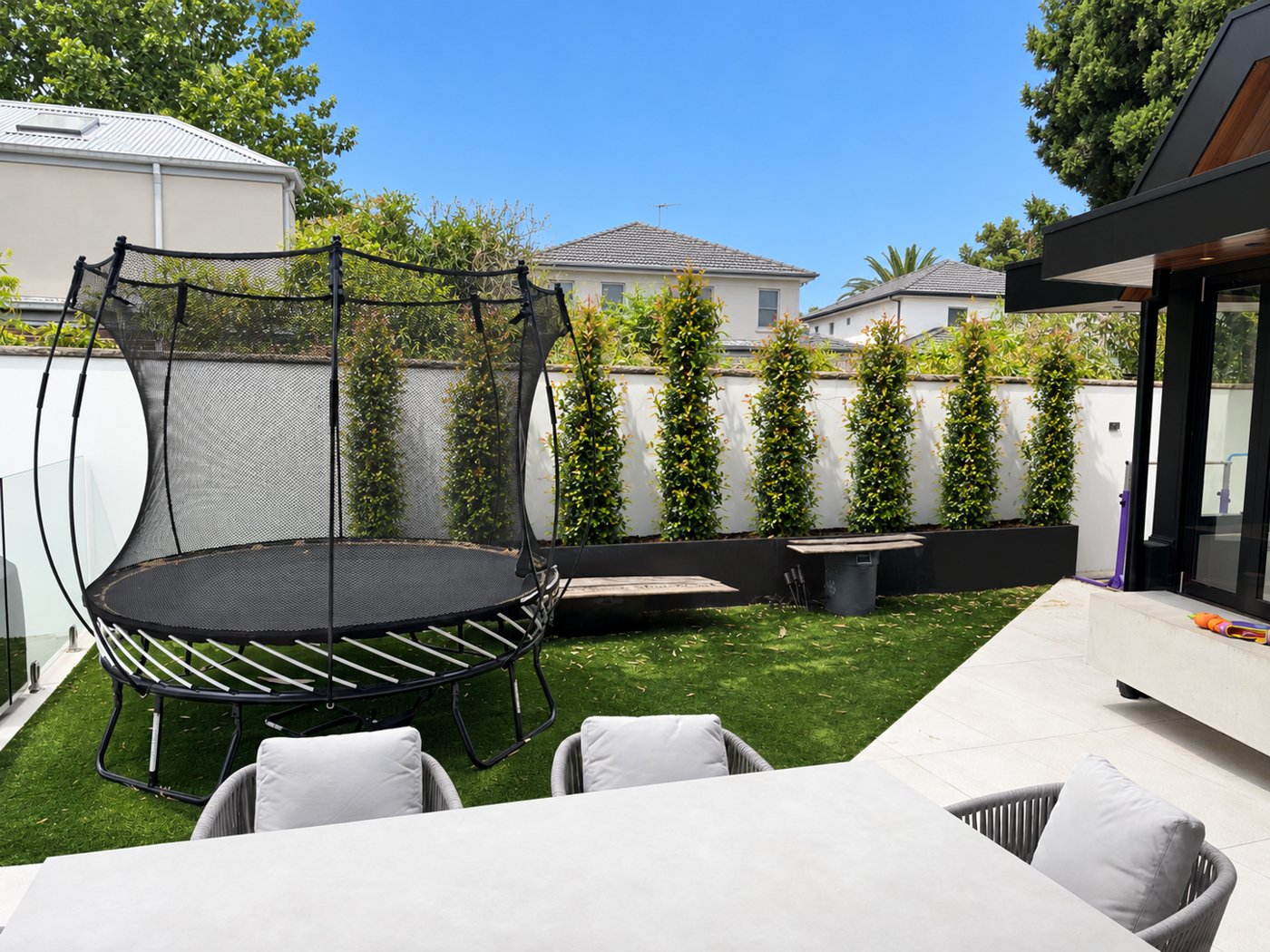
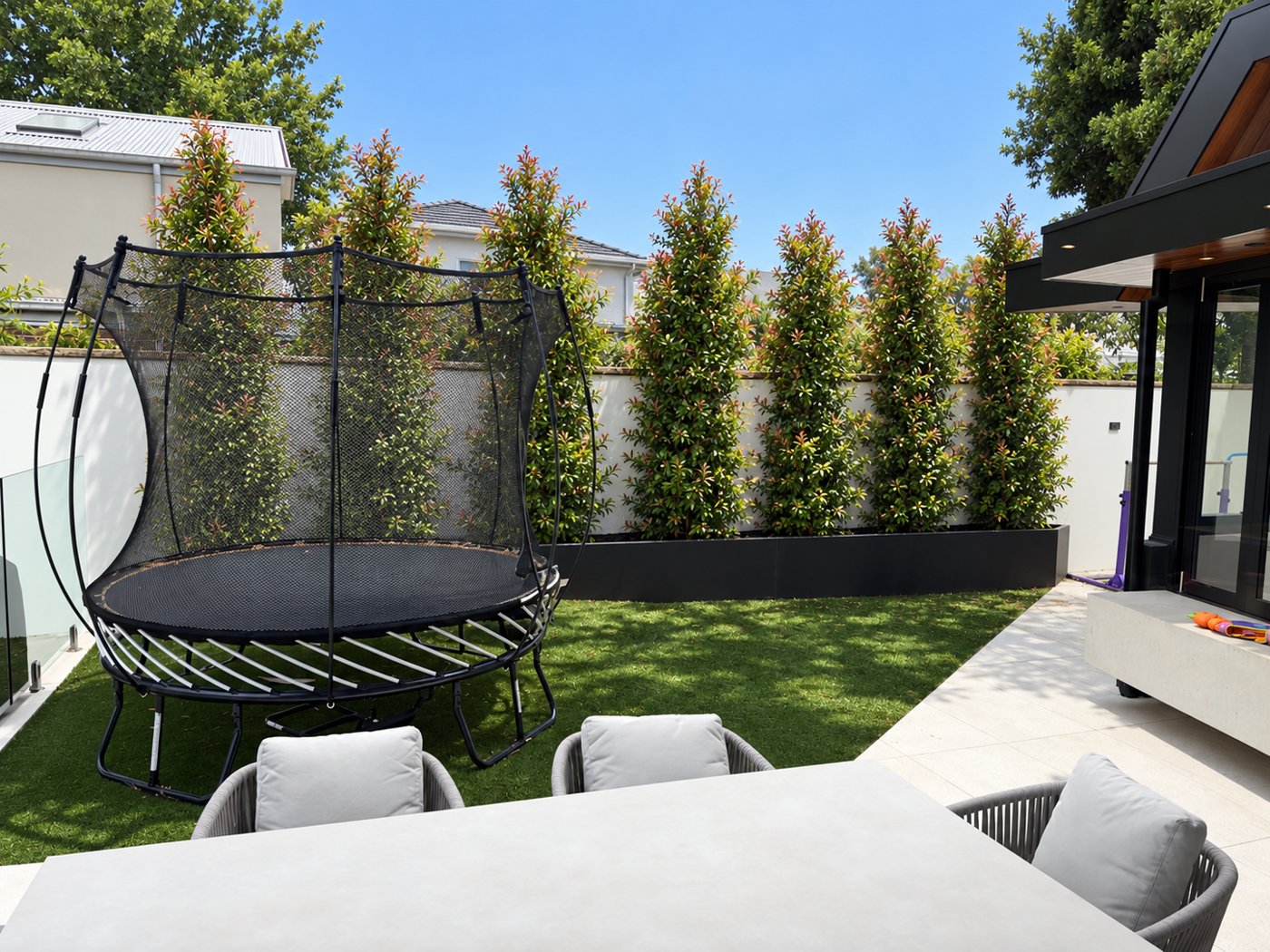
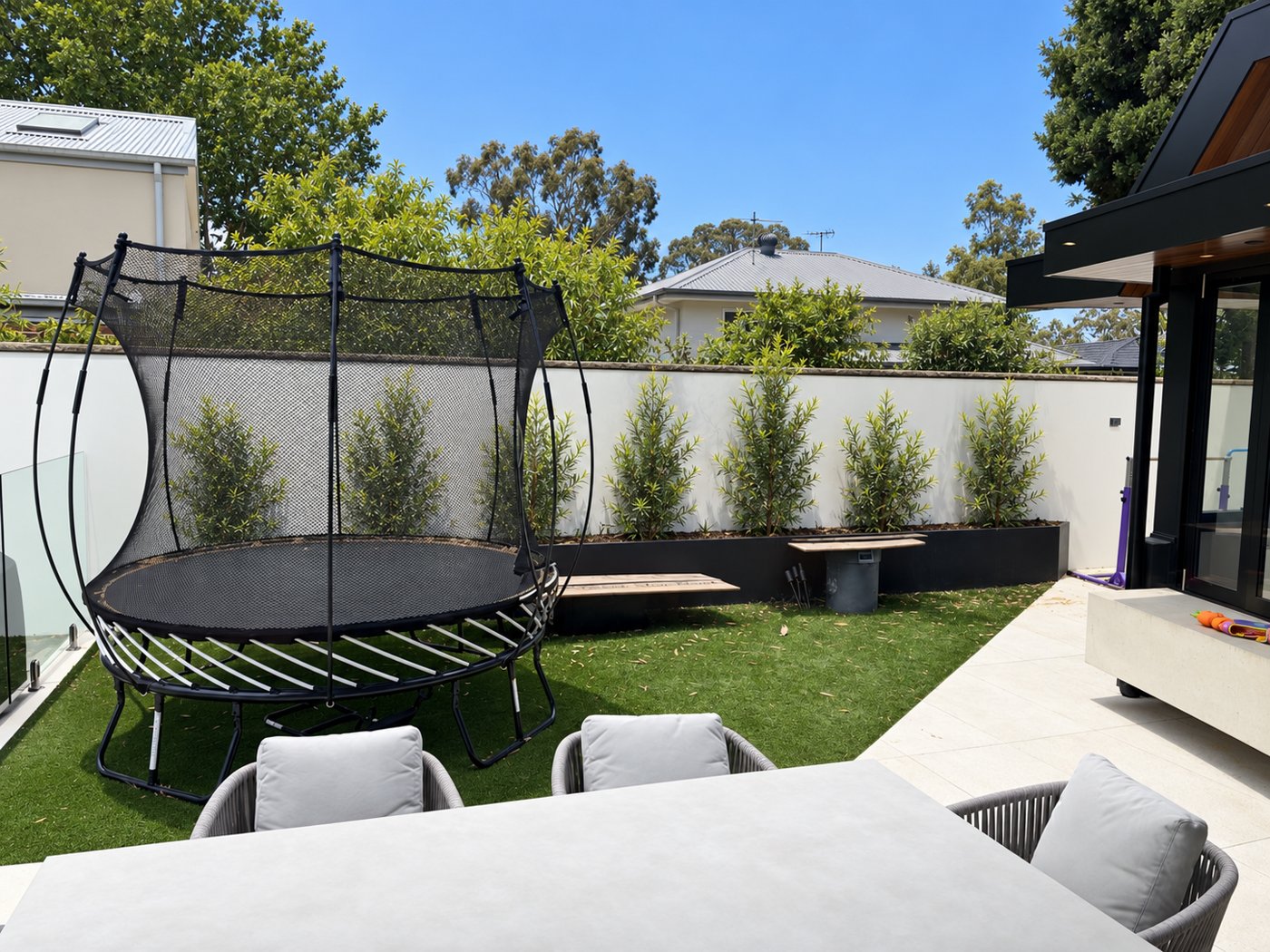
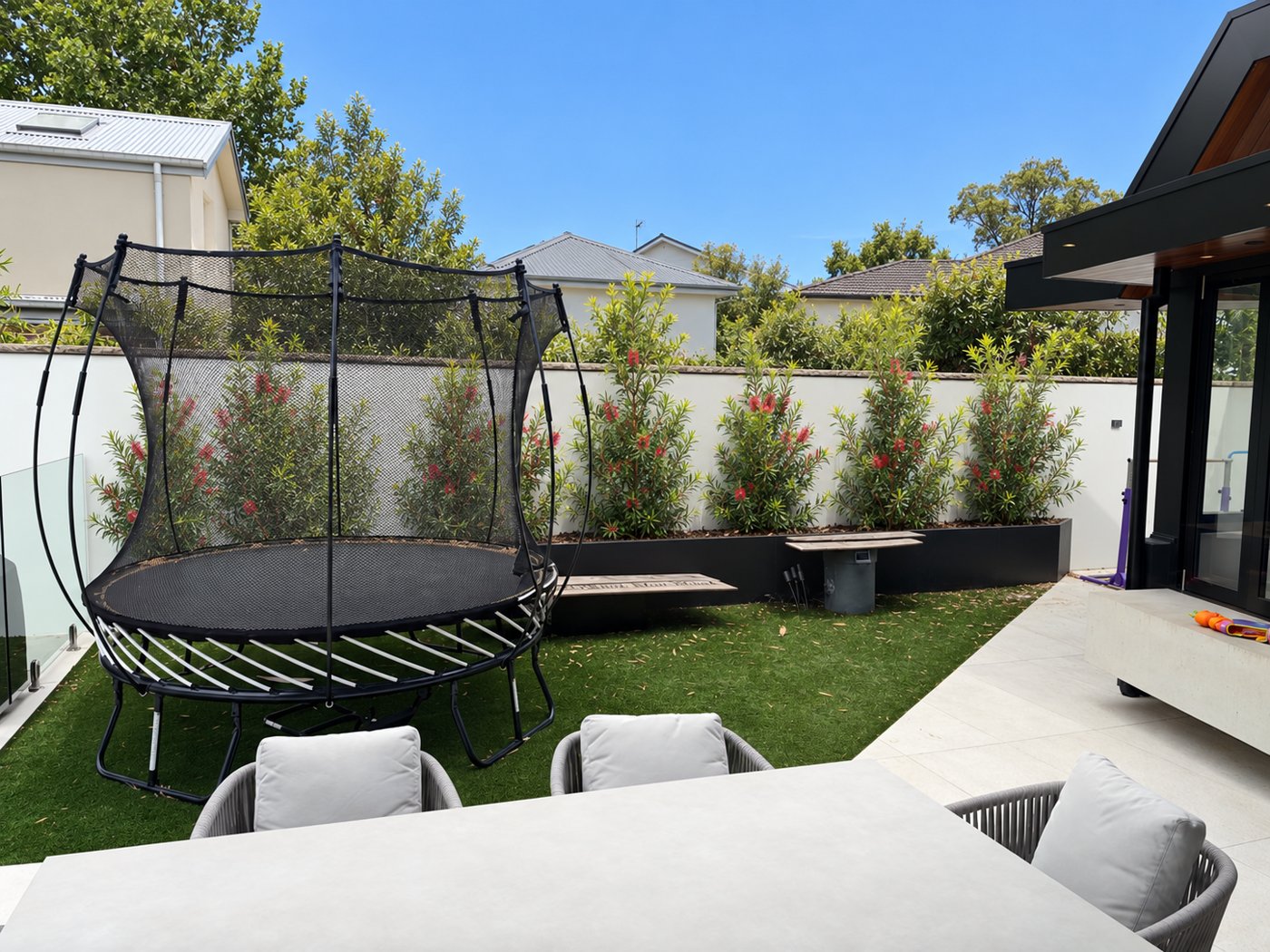
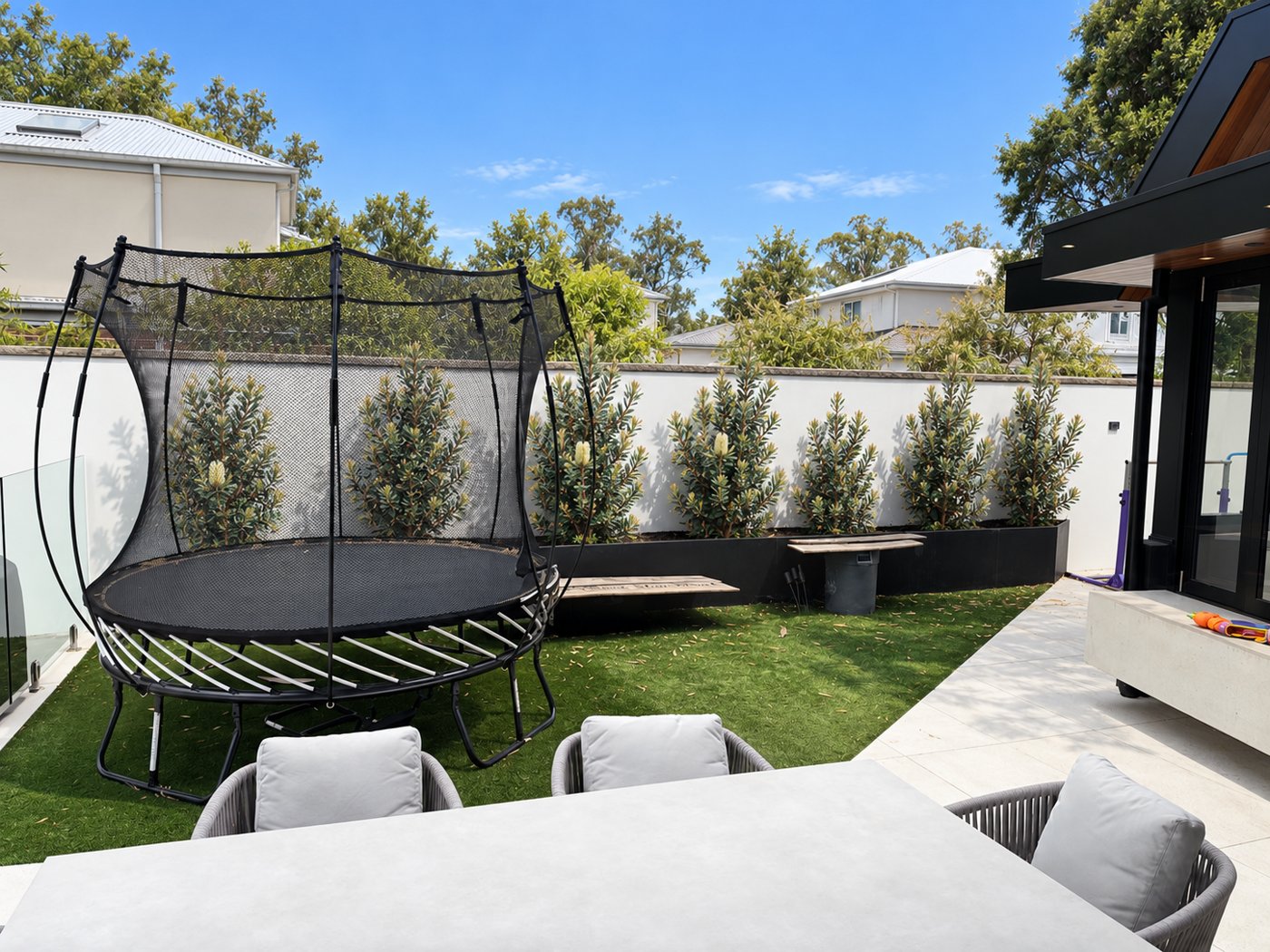
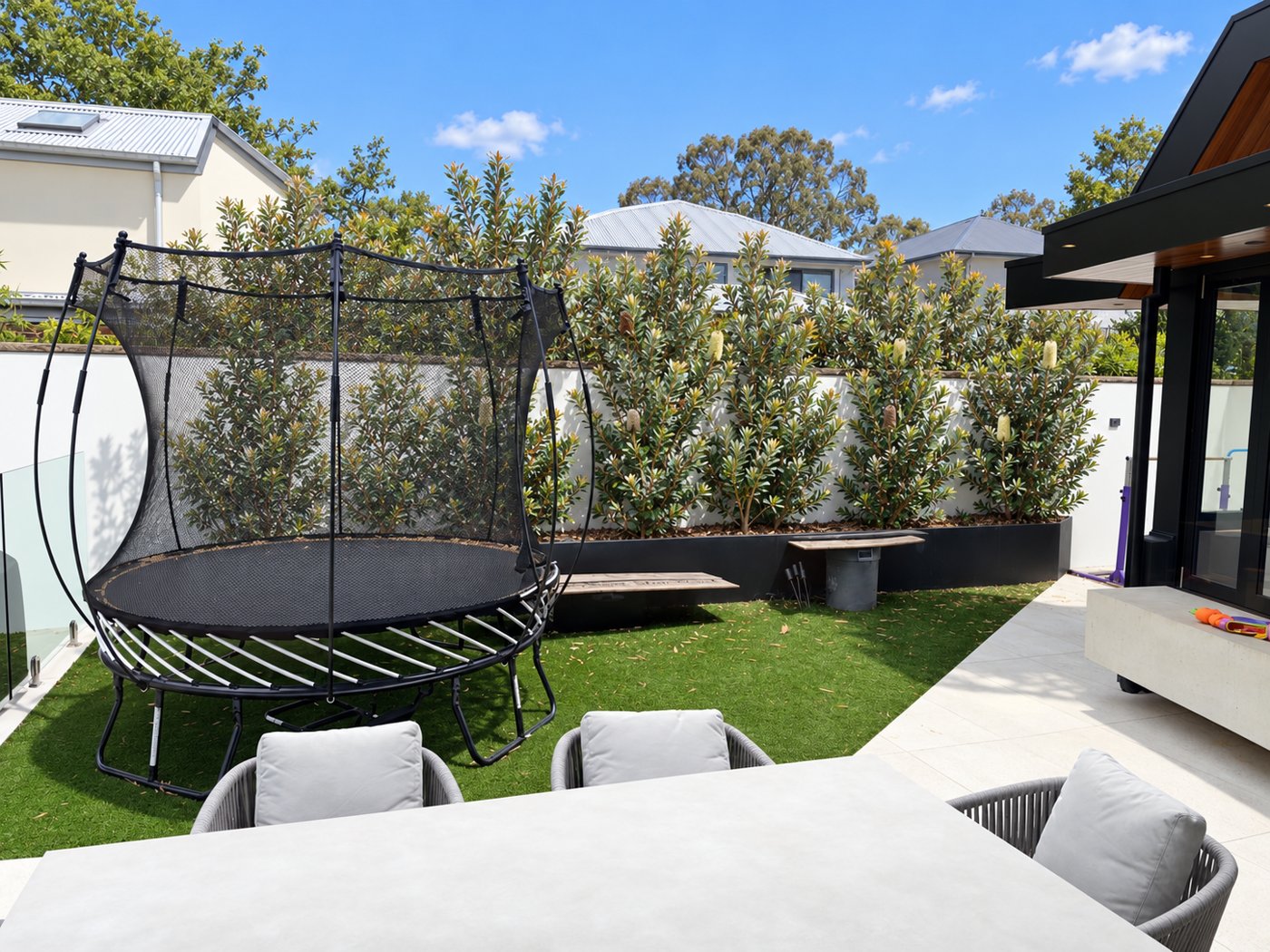
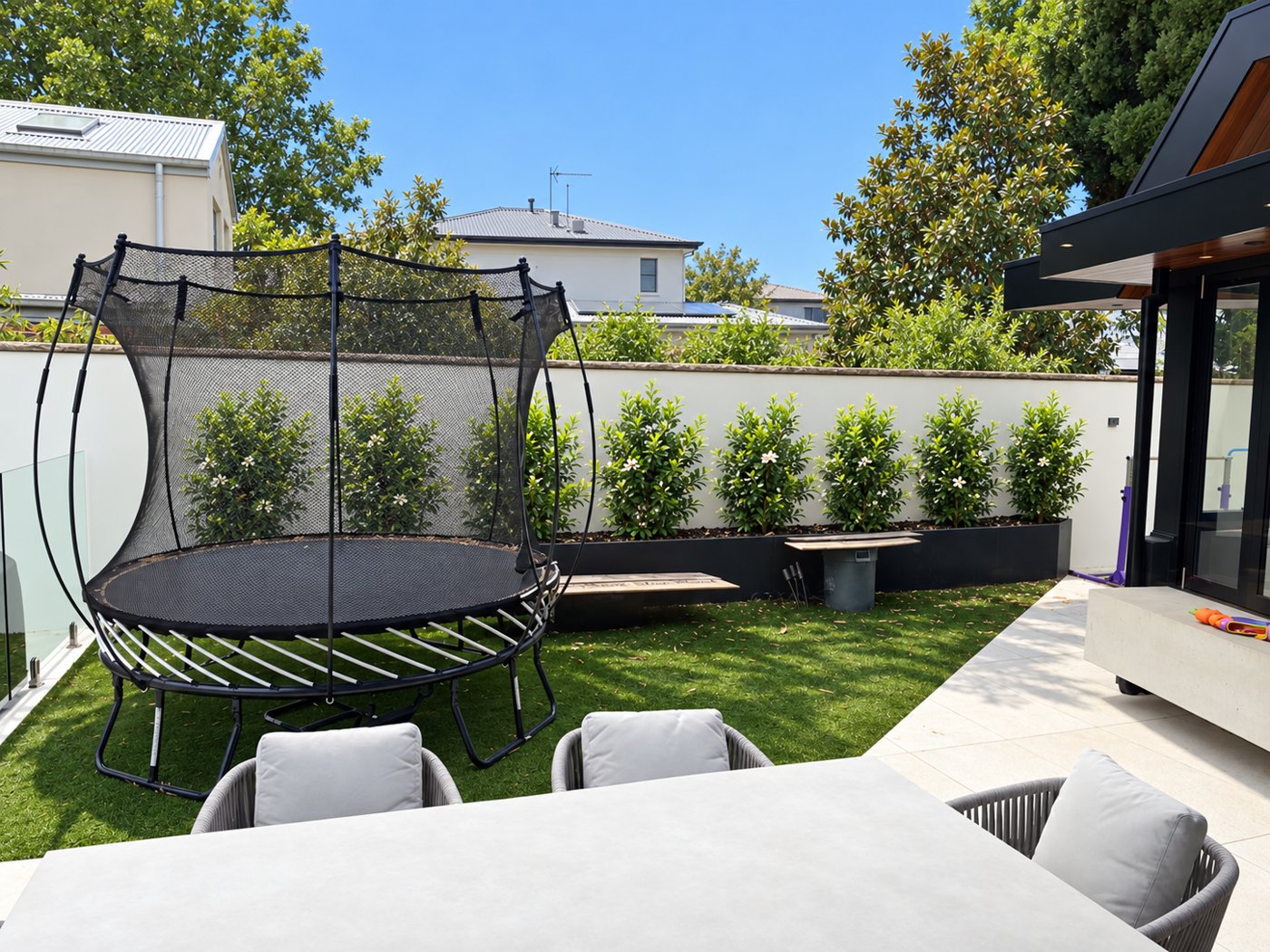
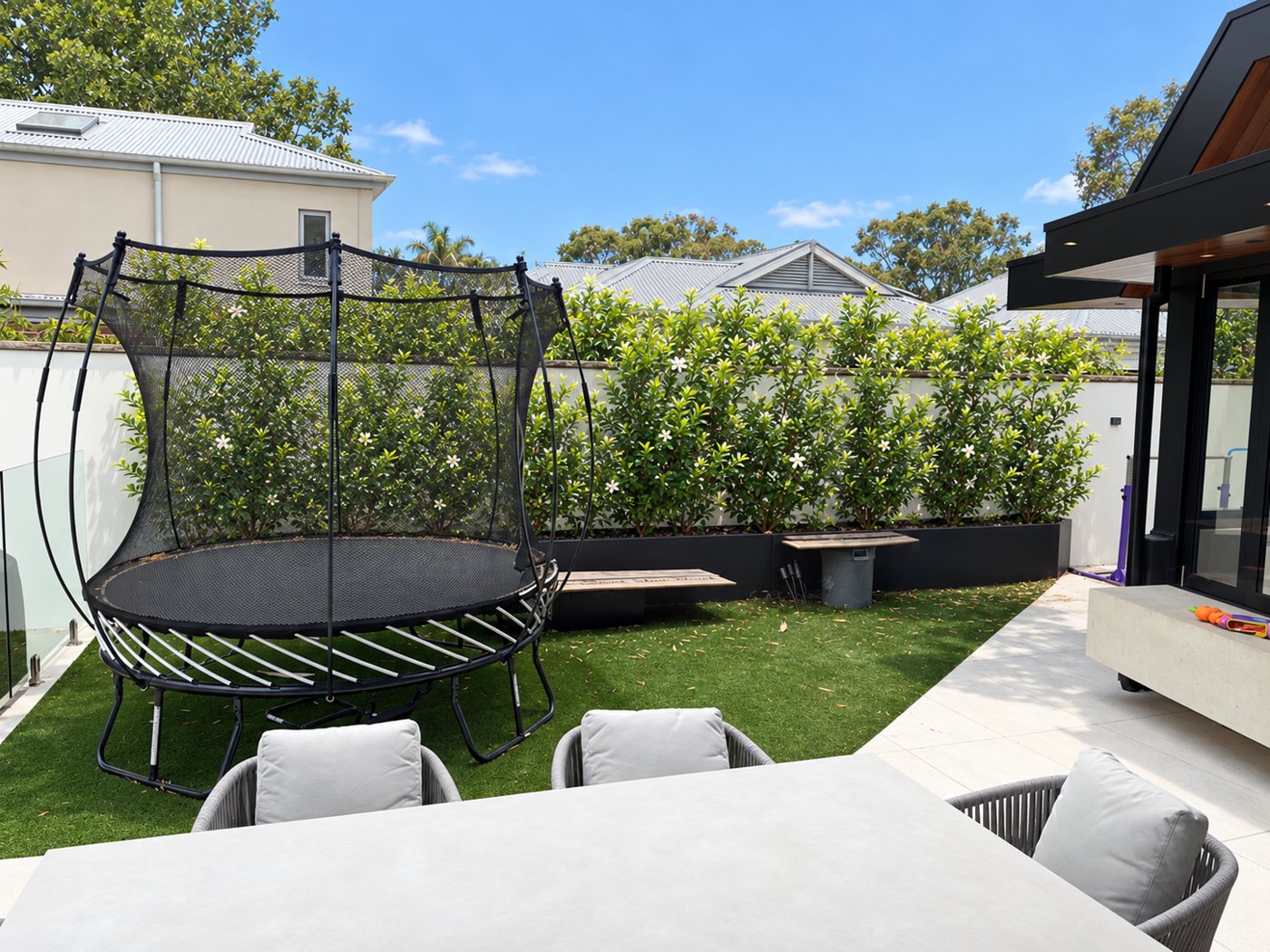
Yard view: 1 yr vs 2 yrs
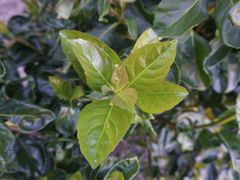
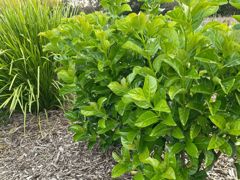
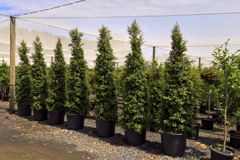
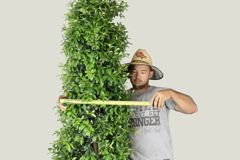
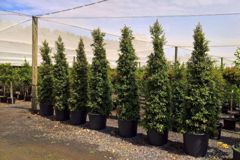
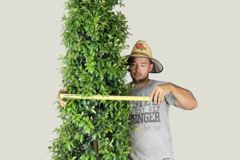
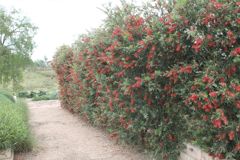
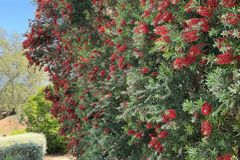
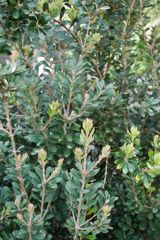
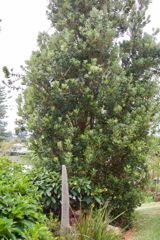
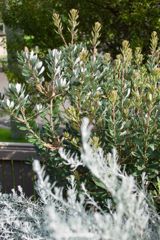
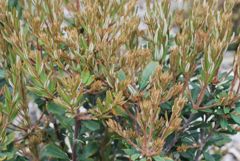
Concept edits of our rear-yard photo with the bamboo removed, guided by real reference photos of each cultivar (thumbnails link to sources); earlier versions kept as -v1 files. About 7 plants along the 6.2 m planter; heights are the assumed above-soil heights from each plant's growth figures on this page (estimates, not forecasts). The 2.0 m wall is the scale.
Excluded plants
Plants considered and dropped, with the reason from our research notes.
| Plant | Why excluded |
|---|---|
| Pittosporum 'Green Pillar' | Pests and disease: susceptible to pittosporum beetle and doesn't do well in Sydney (landscaper, 31 Oct). A Sydney nursery said on 2 Nov they are "always treating it for stuff". |
| All camellias: 'Slimline Avalanche', 'Pure Silk', 'Paradise Blush', 'Setsugekka', 'Hiryu', japonica 'Black Tie' and 'Roger Hall' | Too messy with petal drop. Avalanche and Pure Silk were the landscaper's part-shade picks but come off for the same reason. Only a genuinely lowest-mess variety would be reconsidered; a Nov 2026 check found none that qualify (sasanquas shatter into a petal carpet; japonicas drop whole blooms but are slower, want shade and can hold blighted blooms). |
| Westringia 'Naringa' | Only about 2.2 m unpruned (Ozbreed), under the 2.5-3 m height needed. |
| Photinia 'Red Robin' | Leaf spot spreading in Sydney, made worse by pool humidity; leaves are cyanogenic (dog risk). Every research model ruled it out. ('Thin Red' is a different cultivar and stays.) |
| Pittosporum 'Silver Sheen' | Airy, open screen and summer dieback risk in humidity. |
| Elaeocarpus 'Prima Donna' | Name mix-up (it is E. reticulatus, not E. eumundi) and tree-scale width, far wider than the planter. |
| Leighton Green cypress, Ficus 'Flash', Bambusa 'Gracilis' | On Sydney Water's avoid list (cypress, figs, bamboo). |
| Lilly pillies 'Sweeper' and 'Resilience' | Too wide (Sweeper 5-8 m, Resilience 2-3 m) and Syzygium is on Sydney Water's avoid list. |
| Tristaniopsis 'Luscious' | About 4-5 m wide, drops big leaves and wants moist roots. |
| Lemon myrtle (Backhousia citriodora) | Myrtle rust in Sydney; slow and wide. |
| Elaeocarpus eumundi, riberry (S. luehmannii) | Eumundi has a large root system and drops blue fruit; riberry grows to tree size with heavy staining fruit. |
| Bamboo palm (Chamaedorea) | Burns in sun against hot steel, can't be hedged, leaves gaps. |
| Lilly pilly 'Goodbye Neighbours' (Acmena / Syzygium smithii) | Syzygium is on Sydney Water's avoid list, and it grows to 4-10 m tall x 1-3 m wide with pink-purple berries (Plantmark, Australian Plants Online) - too wide for 39 cm. Same reasoning as 'Firescreen' (also S. smithii). |
| Pencil pine (Cupressus sempervirens, incl. 'Glauca', 'Swane's Gold') | Cupressus is on Sydney Water's avoid list (as Leighton Green). Also cypress canker in humid summers and needs full sun (Nursery Near Me). |
| Lilly pillies 'Sublime', 'Firescreen', 'Select', 'Red Head', 'Pencil Red' (Acmena smithii) | Low-berry or psyllid-resistant, but documented 0.8 m+ clipped width (Firescreen 0.8 m at 1.5 m; Sublime 5 x 2-3 m) - wider than 'Straight and Narrow' for a 39 cm planter. Sublime is the backup if berries matter more than width. |
| Lilly pillies 'Pinnacle', 'Hinterland Gold', 'Elite', 'Up and Away' | Pinnacle fruits profusely and psyllids can be an issue; Hinterland Gold 6-8 x 2-4 m with heavy fruit; Elite 4-5 x 2-3 m; Up and Away largely UNVERIFIED. |
| Lilly pillies 'Bush Christmas', 'Cascade', 'Lillyput', 'Tiny Trev', 'Allyn Magic', 'Aussie Compact', 'Slim Jim' | Too short for a 2.5 m screen (0.5-3 m mature) and/or wide; Lillyput is psyllid prone. |
| Waterhousea 'Green Avenue' | Street tree, 18-20 x 10-12 m (Inner West Council profile). |
Method, assumptions & evidence
Scores are comparative judgements from the supplied research, on a 0-100 scale. Weighted totals use the eight factors below. Higher Root scores mean lower relative risk, not a probability or certification of sewer safety.
Hard filter: mature height ≥2.5-3 m. Supplied mature ranges are reference inputs, not guarantees of a dense screen at that height within two years.
- Renders are Concept image edits of our photo; sizes are approximate. Size, pot and mess durations marked UNVERIFIED are estimates.
- Clipped depth was not found in sources, so Depth scores are relative. Targets are not proven minimums; a continuous hedge strictly within 35-45 cm front-to-back is unverified.
- “Not listed” by Sydney Water is not an approval. Sydney Water advises no trees within 6 m of wastewater pipes. Magnolias are listed with the qualifier "large"; compact cultivars have no explicit exemption in the cited guidance.
- Dense Fence 2-yr images and Banksia / Green Pillar 2-yr images are reused from the 2.5-yr set.
- The trough is confirmed at 39 cm inside width and 60 cm soil depth: use about 300-330 mm pots or suitably dimensioned 45 L bags, and confirm supplier root-ball dimensions before buying. A 400 mm root ball will not fit. Earlier concept renders are not growth forecasts for this restricted root space.
- Growth assumes healthy bush-form stock, light, irrigation and drainage. Forecast heights are above planter soil, not lawn level. Timing, stock availability and site conditions remain uncertain.
Landscaper’s view on Green Pillar
You could give it a go. The only thing is they are susceptible to pittosporum beetle which destroys the leaves. I don't see them doing that well in Sydney but you could try. They do well in Canberra. They are native to NZ so I think that's why they do better in ACT than here
What the pittosporum evidence supports
The beetle occurs in the Sydney region, but host evidence is mainly Bursaria spinosa and occasional Pittosporum undulatum feeding per Published host study (2011). Older reports may confuse beetle species. Attack severity on P. tenuifolium, local infestation rates and differences between cultivars are UNVERIFIED; absence of a found record does not prove immunity.
Waterlogging, drying and heat stress support a shared site caution (RHS growing guide). Scale and psyllids can affect appearance; New Zealand psyllid evidence does not establish Sydney prevalence. Native origin and Canberra planting use do not prove that Sydney plants perform worse. Drainage and root-zone temperature in this planter are unverified.
Precaution applied equally: Green Pillar, Screenmaster, James Stirling and Silver Sheen each receive Climate 65 → 55 (-10) and Pest 60 → 50 (-10). These are judgement-based penalties, not measured failure probabilities or beetle-specific susceptibility scores. Wet-root and heat vulnerability sit under Climate to avoid double counting. Other factors and Table B remain unchanged. Identify actual damage before assigning a pest; no verified species-specific chemical treatment programme is supplied.
Sources
Collected from the supplied evidence and plant notes. Links require an internet connection; the comparison and local renders work offline.
- Source link
- Source link
- Source link
- Source link
- Source link
- Source link
- Source link
- Source link
- Source link
- Source link
- Source link
- Source link
- Source link
- Source link
- Source link
- Source link
- Source link
- Source link
- Source link
- Source link
- Source link
- Source link
- Source link
- Source link
- Source link
- Source link
- Source link
- Source link
- Source link
- Source link
- Source link
- Source link
- Source link
- Source link
- Source link
- Source link
- Source link
- Source link
- Source link
- Source link
- Source link
- Source link
- Source link
- Source link
- Source link
- Source link
- Source link
- Source link
- Source link
- Source link
- Source link
- Source link